
The economy
Norway's economy: why the country is so rich, and what it is building next
- oil fund, passed in 2024
- 20,000 bn NOK
- of goods exports is oil and gas
- 57 %
- workers short in 2026 (NAV)
- 34,000
- Legal minimum
- 239.61 NOK/h
- Typical rate
- 270–300 NOK/h
- Schedule
- Long-term, all year
- Who can apply
- EU and EEA citizens
Arbeidstilsynet, verified · 2026-08-08
≈ €25–€27 · with our partner employers
37.5 h week · overtime at least +40 %
no visa or work permit needed
In short
Norway is rich because it sells energy the rest of Europe needs and saved the profit instead of spending it. Oil and gas brought in about 1,000 billion kroner in 2025, 57 per cent of all goods exports. Since 1996 the state has moved the oil income into a fund that passed 20,000 billion kroner in 2024 and owns about 1.5 per cent of the world's listed shares. GDP works out at roughly 978,000 kroner per person. The money is being spent on roads, tunnels, hospitals and renovation, and NAV counted 34,000 missing workers in 2026, which is where readers of this site come in.
The money
Why Norway is so rich
The big one is energy. In 2025 crude oil, natural gas and condensate earned about 1,000 billion kroner, 57 per cent of everything Norway sold abroad (Norskpetroleum). After Russian pipeline gas left the European market, Norway became the continent's largest gas supplier, and the fields keep producing while Europe keeps buying.
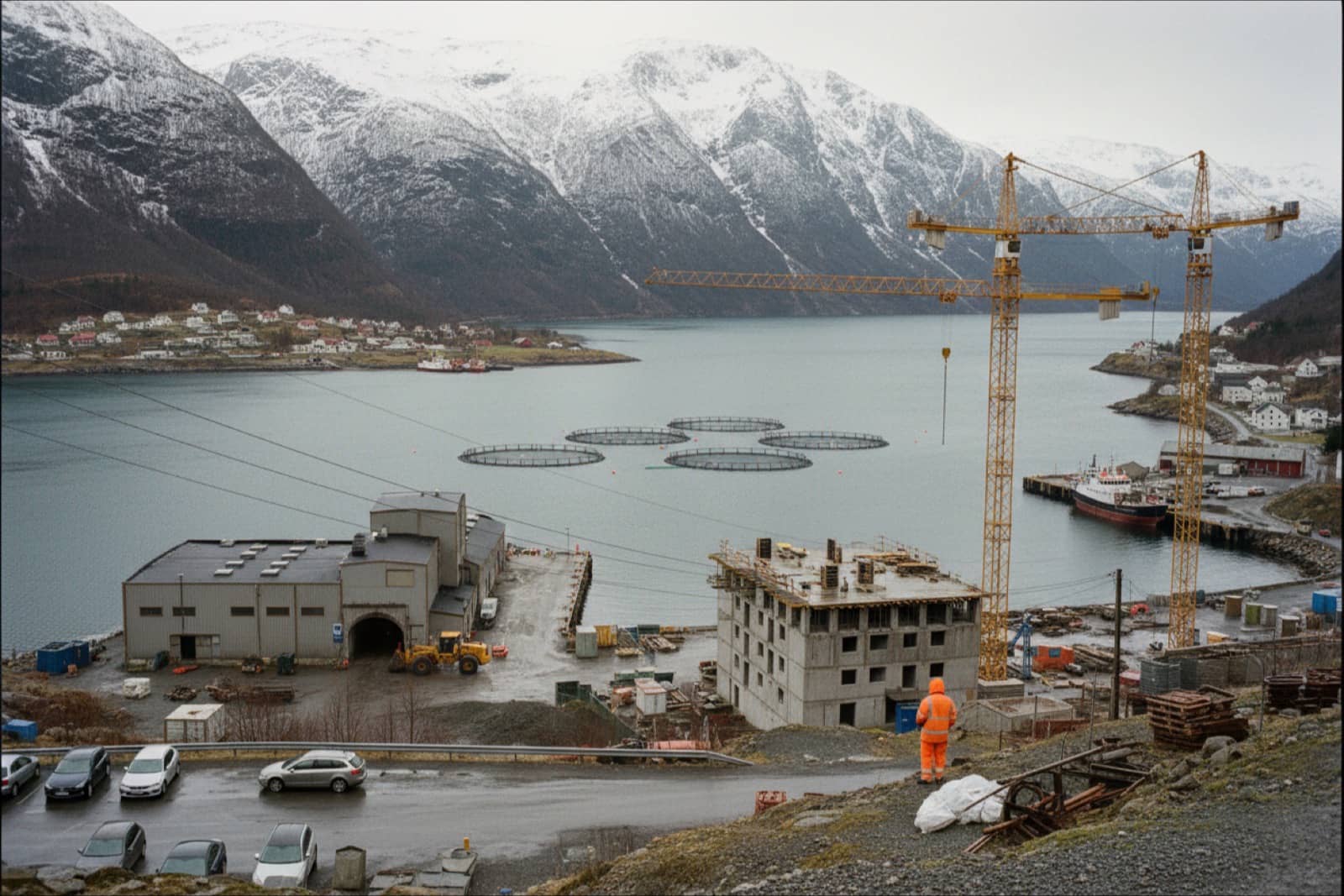
The second is the sea itself. Norwegian seafood exports set another record in 2025 at 181.5 billion kroner (Norwegian Seafood Council), most of it farmed salmon. The single biggest customer is Poland, which bought 19.1 billion kroner of it, much of that for processing in Polish plants. The fish is caught and farmed along the whole coast, which is why the processing plants sit in small northern towns that need workers year round.
The third machine is water falling down a mountain. About 88 per cent of Norwegian power capacity is hydropower, from 1,791 plants, with wind adding roughly 11 per cent (Energifakta Norge). A century of cheap electricity is what built the smelters, the shipyards and now the data centres, and it keeps household heating electric in a country where winter is serious.
| Where the money comes from | Value | The detail |
|---|---|---|
| Oil and gas exports, 2025 | ≈ 1,000 bn NOK | 57 % of all goods exports |
| Seafood exports, 2025 | 181.5 bn NOK | record year; Poland the top market at 19.1 bn NOK |
| Electricity base | 88 % hydro | 1,791 hydropower plants, wind ≈ 11 % |
| GDP, 2025 | 5,511 bn NOK | ≈ 978,000 NOK per person |
The oil fund
The oil fund: what Norway did with the money
The fund owns shares in thousands of companies across the world, close to 1.5 per cent of everything listed on the world's stock exchanges (NBIM). Divide it by the population and every Norwegian, newborns included, has several million kroner sitting in an account nobody is allowed to empty.
The rule that makes it work is boring on purpose: the government may spend roughly the fund's expected real return, about 3 per cent a year, and even that modest slice now covers close to 20 per cent of the state budget. The oil money therefore pays for hospitals, roads and kindergartens every single year without the fund shrinking.
For a worker the fund matters in a quiet way. It is the reason Norwegian public spending does not collapse when the oil price does, the reason construction budgets survive downturns, and the reason wages are settled in an economy that plans in decades rather than election cycles.
Natural resources
What the wealth stands on: gas, fish and falling water
The continental shelf holds the oil and gas fields, worked from platforms and subsea installations that are engineering projects in their own right. The coast grows the salmon: sheltered fjords with stable cold water are the reason farming works here and not everywhere else. And the mountains store the power, 1,791 hydropower stations turning reservoirs into roughly 88 per cent of the country's electricity capacity.
The same geography that pays the bills also makes the country expensive to run. Every fjord needs a ferry, a bridge or a tunnel; Norway operates more than 1,208 road tunnels, including the world's longest at 24.5 km outside Lærdal. Keeping a scattered country connected is a permanent construction programme, which is exactly where the labour demand on the next section comes from.
Booming now
What Norway is building right now, and what comes next
The headline projects are easy to name. Rogfast under the Boknafjord will be the world's longest and deepest subsea road tunnel, 27 km long and 400 metres down, budgeted at 33.4 billion kroner and due to open in 2033. In Oslo the new Aker and Rikshospitalet hospitals carry about 25 billion kroner of contracts with completion around 2031.
The quieter boom is renovation. The repair and rebuild market was worth 121.4 billion kroner in 2024, and Prognosesenteret expects building activity to grow about 6 per cent in 2026 as interest rates ease. A quarter of Norway's homes were built in the 1970s and 80s and they are all due for roofs, walls and bathrooms at once.
And the next wave is already visible in the statistics: SSB expects the number of people over 80 to double by 2050, which means care homes, hospital wings and adapted housing for decades. None of this can be imported ready-made. It has to be built, staffed and maintained in Norway, by people who are physically there.
| Programme or project | Money | Horizon |
|---|---|---|
| National Transport Plan 2025-2036 | 1,308 bn NOK | to 2036, 40 % maintenance and renewal |
| E39 Rogfast subsea tunnel | 33.4 bn NOK | opens 2033 |
| Nye Aker and Nye Rikshospitalet, Oslo | ≈ 25 bn NOK of contracts | completion ≈ 2031 |
| Renovation (ROT) market | 121.4 bn NOK in 2024 | growing 6 % in 2026 |
The sectors
Where the boom turns into jobs
Construction trades
Roads, hospitals, housing and renovation. NAV counted 4,750 missing construction workers in 2026 alone.Fish factories
Processing the 181.5 billion kroner export catch, in coastal plants that run year round.Agriculture and seasons
Harvests, greenhouses and farm work concentrated in the light half of the year.Transport
Trucks moving fish south and goods north, on roads the transport plan is rebuilding.
The catch
The catch: Norway is short of 34,000 people
Construction shows why. The industry employed 251,000 people in 2022, but only 77 per cent of them were born in Norway, down from 88 per cent in 2008 (Fafo). Norwegian schools produce about 9,000 trade certificates a year across all trades, while the industry alone needs 4,300 to 10,900 new people every year just to stand still.
The gap has been filled the same way for twenty years: by workers from the rest of Europe, on Norwegian contracts and Norwegian minimum rates. That is not a loophole, it is the system working as designed, and it is the reason this site exists.
Pay
What the wealth means for a wage
In construction the statutory floor is 239.61 kroner an hour without a trade certificate and 264.32 with one. In fish processing production workers start at 225.96 kroner an hour. Overtime adds at least 40 per cent, and holiday pay of 10.2 per cent of the year's earnings comes on top.
What a month comes to depends on the hours, and the hours belong to the project, so no serious employer promises a monthly figure. Use the calculator to turn a real hourly rate into a net month at your own hours and tax card.
The other side
What cuts the other way
First, 57 per cent of goods exports is one commodity family, and Europe intends to need less of it. Norway's own answer is the fund, which has already turned one-off oil income into permanent financial income, but the transition will reshape which sectors hire over the coming decades.
Second, the wealth shows up at the till. Food, fuel, rent and a haircut all cost more than almost anywhere else in Europe, which is why an hourly rate that looks spectacular from Riga or Katowice needs the cost of living subtracted before it is compared. The employer usually arranges housing for placed workers, with rent deducted from pay, and that arithmetic is on the job pages, not hidden.
Third, the labour market is regulated and documented: an HMS card on every site, registered contracts, taxed from day one. For workers this is protection rather than friction, but it rewards people who have their documents in order and punishes shortcuts.
For workers
Why this matters to a reader with an EU passport
EU and EEA citizens do not need a visa or a work permit for Norway. Through the EEA agreement you register, you work, and the statutory rates above apply to you from the first hour. That makes Norway the rare rich labour market that is legally wide open to a Latvian, a Pole or a Lithuanian with no paperwork lottery in between.
The work I place is concrete: construction crews on renovation and new build, fish factory shifts on the coast, seasonal agriculture, drivers. Employers arrange housing, contracts are Norwegian, and the floors on this page are the floors in the contract. If the economics of this page convinced you, send one application. I read every one myself and reply personally.
Questions
Norway's economy: common questions
Why is Norway so rich?
Because it exports energy and food that the rest of Europe needs, and because it saved the profits. Oil and gas earned about 1,000 billion kroner in 2025 (57 per cent of goods exports), seafood a record 181.5 billion, and since 1996 the oil income has been saved in a fund that passed 20,000 billion kroner in 2024.
How big is the Norwegian oil fund?
The Government Pension Fund Global passed 20,000 billion kroner in 2024 and owns close to 1.5 per cent of all listed shares in the world (NBIM). The state may spend roughly the expected real return, about 3 per cent a year, which covers close to 20 per cent of the budget.
What are Norway's main industries?
Oil and gas, seafood and aquaculture, power-intensive industry running on hydropower (88 per cent of capacity), shipping, and a large construction sector that employed 251,000 people in 2022. Tourism and services carry the cities.
What does Norway export the most?
Energy. Crude oil, natural gas and condensate were 57 per cent of goods exports in 2025, worth about 1,000 billion kroner (Norskpetroleum). Seafood is the biggest non-energy export at 181.5 billion kroner, with Poland the largest single market.
Is Norway in the EU?
No, but it is in the EEA, which is the part that matters for a worker: EU and EEA citizens can live and work in Norway without a permit, and the statutory minimum rates apply to them in full from the first hour.
What is booming in Norway right now?
Infrastructure and renovation. The transport plan commits 1,308 billion kroner to 2036, Rogfast (27 km, opening 2033) is under the sea already, the Oslo hospitals carry about 25 billion kroner of contracts, and the renovation market passed 121.4 billion kroner in 2024.
Does Norway need foreign workers?
Yes, and it says so itself: NAV's 2026 employer survey counted 34,000 missing workers across the country, 4,750 of them in construction, and only 77 per cent of construction workers were born in Norway (Fafo).
What is the minimum wage in Norway?
There is no single national minimum, but in the industries that hire from abroad the state has made collective rates binding: at least 239.61 NOK an hour in construction without a certificate (264.32 with one) and 225.96 NOK an hour in fish processing, plus at least 40 per cent for overtime.
Is Norway expensive to live in?
Yes. Prices for food, fuel and housing are among the highest in Europe, which is exactly why the comparison that matters is the hourly rate minus real living costs. For placed workers the employer usually arranges housing with rent taken from pay, and the arithmetic is published on the job pages.
Sources
Where every number on this page comes from
- Norskpetroleum, exports of oil and gasread 1 September 2026
- Norges Bank Investment Management, about the fundread 1 September 2026
- SSB, national accountsupdated 27 August 2026
- SSB, population, 2nd quarter 2026read 1 September 2026
- Energifakta Norge, electricity productioncapacity at the start of 2025, read 1 September 2026
- Norwegian Seafood Council, 2025 export figurespublished January 2026
- Samferdselsdepartementet, National Transport Plan 2025-2036presented 22 March 2024
- Statens vegvesen, E39 Rogfastread 1 September 2026
- Helse Sør-Øst, Nye Rikshospitalet contractsupdated 12 May 2026
- NAV, Bedriftsundersøkelsen 2026published 20 May 2026
- Fafo report 2024:35, the construction workforceJuly 2024
- Prognosesenteret figures via Nemitek23 September 2025
- Arbeidstilsynet, minimum rates of payverified 2026-08-08
What happens after you apply
A chat with TANA
Our own AI, TANA, may start the conversation. It asks about your trade and the work you are after.
We read it and get in touch
Our team goes through your application and the chat. If a job fits, we contact you personally. If we do not get in touch right away, you stay on file and we may write a month or two later.
We put you forward
Your profile goes to the Norwegian employer and we set up the call.
Contract and travel
Your contract is with the Norwegian employer. We meet you in Norway and take you to your place.
Every application gets an answer within a month.
Apply
The boom is hiring. Be one of the people it hires.
If you hold an EU or EEA passport and you want work in construction, fish processing, agriculture or transport in Norway, send one application. I match you with vetted Norwegian employers and reply personally.
Keep reading
- Why Norway needs construction workersThe shortage and the pipeline, sourced
- How Norway was builtFrom stave churches to Troll A, with the SSB series
- Renovating 1970s houses in NorwayThe quiet boom, house by house
- Construction jobs in NorwayAll the trades and the statutory rates
- Fish factory work in NorwayThe jobs behind the export record
- Salary calculatorFrom hourly rate to net month